
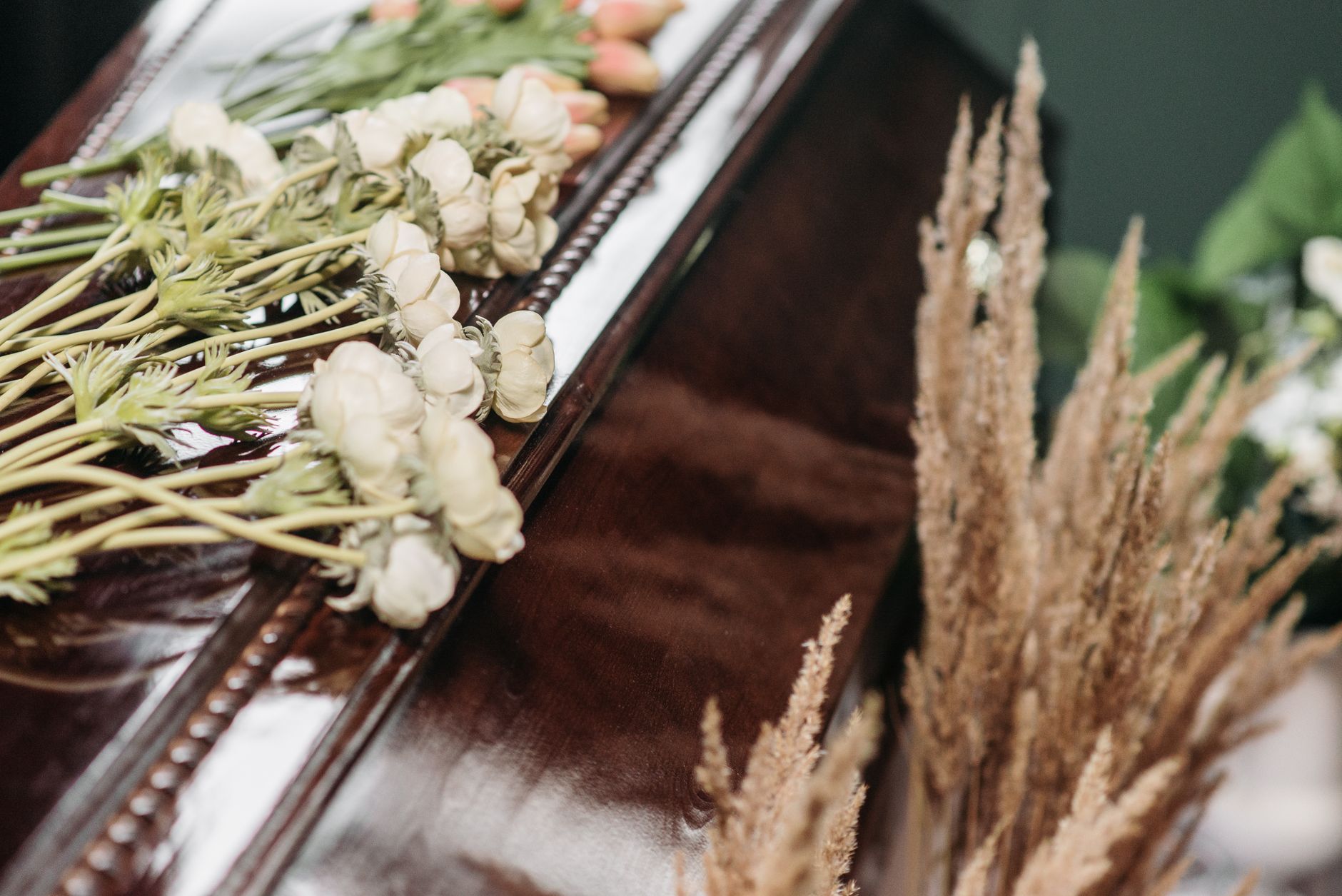
The place that looks right for a memorial during a family gathering may feel different when the house returns to its ordinary routine. A table used for photographs and flowers may need to become a dining table again. A prominent shelf may feel comforting to one person and too public to another.
Choosing a place at home is therefore a household decision as well as a design decision. It involves the way people move through the rooms, the objects already there, and how much visibility the family wants. The arrangement does not have to look ceremonial to be meaningful.
Begin with a safe, suitable place for the container and one or two personal items. You can add, remove, or relocate things as you learn what feels comfortable. A home memorial should fit the people living around it rather than require the household to preserve the exact appearance of a service display forever.
Decide how visible the memorial should be
Some families want the container in a room where they spend time every day. Others prefer a private bedroom, study, or cabinet. Neither choice needs to be justified as more caring or more respectful. Visibility is a preference, not a measure of remembrance.
Talk with the people who share the home before choosing a prominent location. One person may appreciate seeing it beside a familiar photograph, while another would prefer a quieter setting away from visitors. Understanding the difference can prevent the first placement from becoming a point of tension.
Consider what visitors will see and whether the family wants to explain the arrangement. A container can be displayed openly without requiring every guest to discuss it. A more private placement may suit a household that prefers to keep those conversations within the family.
If nobody is certain, choose an appropriate temporary place and agree to revisit it. The first position does not have to become a permanent household rule. What matters is that the container is secure and everyone understands the current arrangement.
Choose a stable surface before styling it
Look for a surface that supports the full base and is unlikely to be bumped during normal activity. Avoid narrow edges, unstable furniture, or a position where a door can strike the container. A visually appealing shelf may still be a poor practical choice.
Check the product’s dimensions and weight, and make sure the furniture is suitable for the complete arrangement. Include the weight and space occupied by frames, decorative objects, and any protective base. If the shelf has a stated load limit, use that information rather than guessing.
Think about children, pets, and routine cleaning. The container should not sit where it is likely to be pulled down, knocked over, or moved casually by someone who does not understand what it holds. Choose a location that reduces the need for constant reminders.
When comparing urns, keep a photograph and measurements of the intended space nearby. The product should fit the location with comfortable room around it. Its picture on a plain background may make it appear smaller or less prominent than it will be at home.
Let familiar objects give the space character
A memorial can feel personal through ordinary objects already connected to the person. A photograph from a favorite trip, a well-used recipe card, or a small piece of artwork may say more than a collection purchased specifically for the display.
Choose objects with a clear connection rather than trying to represent every part of a life. A crowded arrangement can make each item harder to notice. Start with the container and one photograph, then add another object only if it contributes something the family values.
The photograph does not have to be formal. A person laughing in a kitchen or working in a garden may feel more recognizable than a studio portrait. Use a copy if the original is fragile or irreplaceable, and keep the original stored appropriately elsewhere.
If the chosen object has a story, write it down. A grandchild may not know why a particular shell, ticket, or small tool has been placed beside the memorial. A short note in the family records can preserve that meaning without turning the display itself into a written exhibition.
Work with the room instead of redesigning it around loss
Use the room’s existing scale and materials as a starting point. A small grouping on a bookcase may fit naturally in a lived-in room, while a dedicated table may be more appropriate if the family wants a distinct space. There is no need to make the arrangement resemble a showroom.
Leave enough clear area for the container to be seen and handled safely. If it is surrounded by books or frames, make sure those objects can be moved without knocking it. Everyday practicality matters as much as the initial composition.
Consider the background. A plain wall may make a decorative vessel stand out, while a busy pattern can compete with its details. You can test the arrangement with an object of similar size before placing the filled container, reducing unnecessary handling.
Keep pathways and household functions intact. A memorial should not block access to a cabinet, occupy the only usable work surface, or create an obstacle in a small room. A more modest location that works every day can be a better choice than a dramatic arrangement that repeatedly has to be moved.
Use lighting and flowers with practical care
Notice how the space changes during the day. A reflective finish may look bright beside a window, while a darker surface may be less visible in a dim corner. Use the product’s care instructions when considering exposure to sunlight, heat, or moisture.
If you want a soft light nearby, a stable electric or battery-operated option can avoid placing an open flame beside papers, fabrics, or other objects. Keep cords out of walking routes and follow the lighting product’s instructions. The effect can be simple without introducing a complicated display.
Flowers can be part of the arrangement, but position water-filled vases where a spill will not reach the container or important photographs. Use a separate tray or surface if needed. Choose a setup that is easy to refresh without lifting the memorial each time.
Artificial flowers or no flowers at all may suit the household better. The arrangement does not need constant replenishment to remain meaningful. Families should be able to leave it undisturbed during a busy week without feeling that routine life has neglected the person.
Agree on how the container will be handled
Tell household members which part of the vessel is the lid and how it should be lifted. Follow the manufacturer’s directions and avoid using a lid, handle, or decorative feature as a lifting point unless the product is designed for that purpose.
Decide who will move it for cleaning or a family gathering. This can be an informal agreement, but it prevents several people from making different assumptions. Keep the closure and care instructions somewhere easy to find.
If professional cleaners or other helpers enter the home, explain whether the container should be left in place. You can ask them to clean around it while a family member handles the immediate area. A respectful, clear instruction is easier than expecting someone to identify the object correctly on sight.
Do not add adhesives, polish, or a protective coating without the maker’s guidance. The surface may include paint, a finish, or an inscription that needs particular care. The simplest routine is often to follow the instructions supplied for the exact product rather than improvise a general cleaning method.
Include children without assigning them responsibility
Children living in the home may ask what the container is or why it has been placed there. Give a clear explanation appropriate to their age and the family’s beliefs. Avoid expecting them to understand the importance of a decorative object without a conversation.
Explain practical boundaries simply. The container stays on its surface and is handled by an adult; photographs or other designated items may be looked at together. The goal is clarity rather than making the surrounding room feel forbidden.
Invite children to contribute a drawing or choose a photograph if they want to. They should also be free not to participate in arranging the space. A contribution can be kept in a nearby folder if the display itself is small.
Keep responsibility with adults. A child should not be expected to guard the memorial, manage visitors’ behavior, or maintain a particular ritual. The household can share memories without making care of the container into a duty that belongs to its youngest members.
Make room for changes in the household
A move, renovation, new pet, or change in room use may require a different location. Review the practical arrangement as those changes happen. Relocating a memorial can be a sensible household decision rather than a sign that it has become less important.
If the family plans to move the remains to a cemetery or another permanent location later, keep that plan recorded separately from the current display. It helps to distinguish “this is where it is now” from “this is where it will always stay.”
Ask the people responsible for future arrangements what information they would need. Keep the identification, provider contacts, and any cemetery documents with the family records. The meaning of the container should not depend entirely on one person being available to explain it.
When the memorial moves, the home can still retain a photograph or another familiar object. The family does not have to choose between keeping the entire arrangement unchanged and removing every visible reminder. Individual elements can take different places over time.
Let the space become part of ordinary life
Once the container is safely placed, step back and consider how the arrangement feels during a normal day. Can the room still be used comfortably? Does the display invite the amount of attention the household wants? Is anything there only because someone felt it was expected?
Remove or adjust what does not fit. You might keep a single photograph instead of several, move flowers to another table, or choose a quieter shelf. Small changes can make the arrangement easier to live with without changing its meaning.
A thoughtful home memorial has enough practical care behind it that the family does not need to worry about it constantly. It can sit among the books, photographs, and familiar routines of the household, giving remembrance a place while leaving room for everyday life to continue.